
LIGHT & ATMOSPHERE
A room needs more than one kind of light.
Good lighting begins with what you do in a room and how you want it to feel.
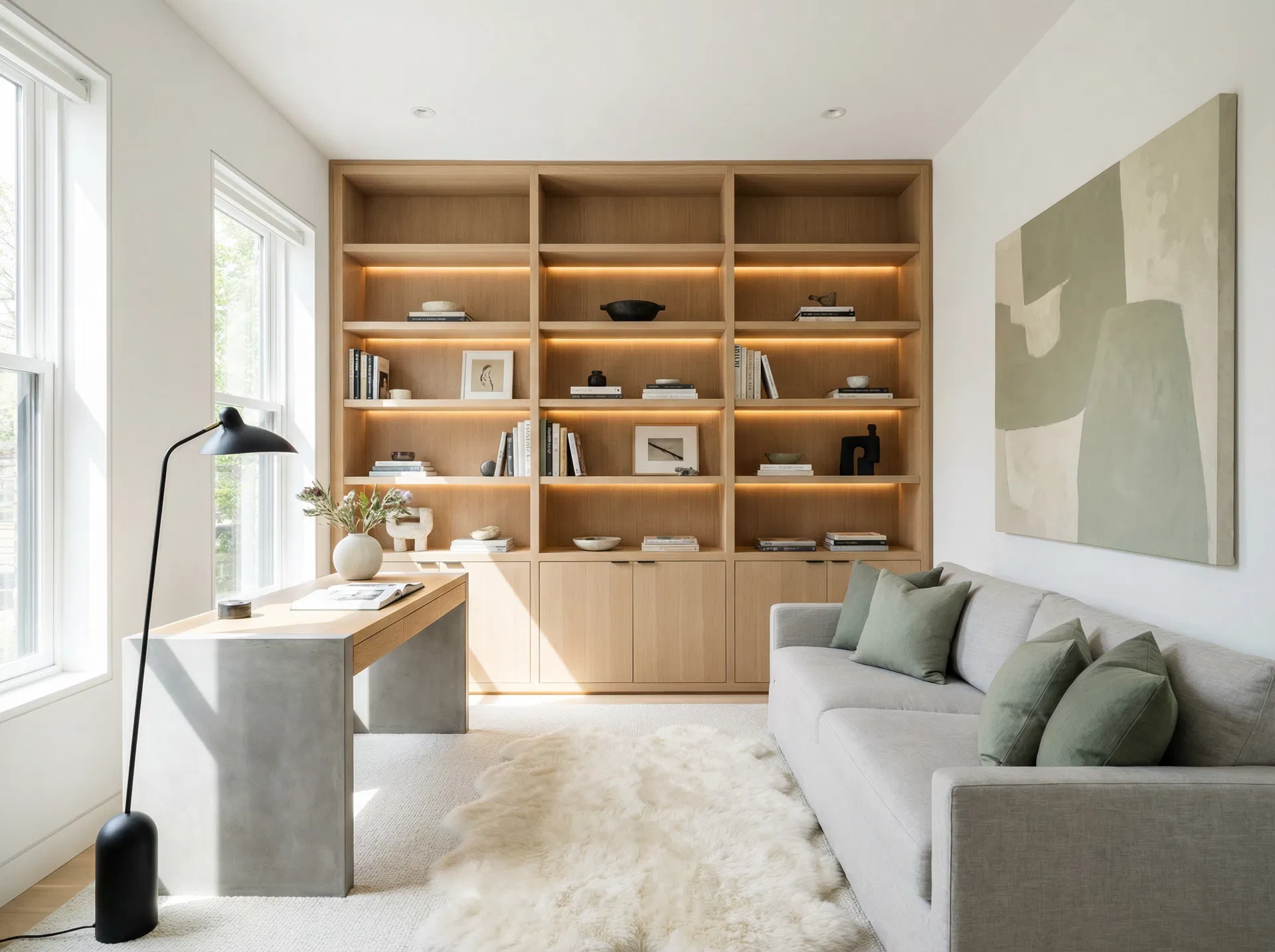
A room may have a bright ceiling light and still feel uncomfortable for reading or unwelcoming in the evening. Different activities call for light in different places. A useful starting point is to look at the room in three layers.
Light for the whole room.
General lighting helps you see the space and move around it. Notice whether one area is bright while another remains in shadow. Think about the room after sunset as well as in daylight, and consider where you enter and where you need to reach a switch.
Light for the task.
Reading, writing, and preparing a meal benefit from light near the activity. Try a reading lamp beside your chair, adjusting its position so the page is lit and the bulb is not directly in your line of sight. Check for reflections on screens, glossy pages, and nearby surfaces.
The right placement depends on the furniture, your usual position, and the fixture. Test the arrangement while doing the activity rather than judging from across the room.
Light for the atmosphere.
A shaded table lamp can bring warmth to an evening conversation. Lighting near a shelf or artwork can draw attention to something meaningful. This layer adds character, but it should work alongside the light you need to use the room comfortably.
Make the controls convenient.
A lamp is less useful if its switch is hidden behind furniture. Try the controls before buying and think about where you will reach from. Dimmers can offer flexibility when the bulbs and fixtures are compatible. Ask a qualified electrician about changes to fixed wiring and installed controls.
Try this tonight
Sit where you usually read after dark. Notice whether you can see the page comfortably, whether anything creates glare, and whether the switch is easy to reach. Then look at how you move from that chair to the next room. Those observations give you a more useful shopping list than simply deciding to buy a brighter bulb.
Let’s think about your home.
A personal design conversation can help turn your ideas into a clear next step.
Talk with Magda